
Back in 2002 I was sitting feeling discouraged and bored in a plenary session for UK delegates at a large evangelical congress in Budapest. Seeing an older man get up and walk out, I reasoned that if he could, I could, so I followed him for an afternoon that changed my life. The older man was Ranald Macaulay, who had worked closely with Francis Schaeffer and had been involved in starting the English branch of L’Abri. Ranald took me round the art museum, patiently introducing this uncultured and somewhat pragmatic former medic and parachurch worker to art and beauty and showing how it all related to God - who he is, what he’s like, what he is doing in the world, the extent and scope of the Gospel. That afternoon my somewhat utilitarian 'Gospel' that was only the means to the end of getting people forgiven, was expanded to become the glorious good news of the redemption and restoration of everything. Where beauty and love of beauty were at best incidental before, they were reinstated (redeemed, in fact) as not only an inherent aspect of what it means to be human, but a reflection of the character of the beautiful God who made it all in the first place.
This theological, philosophical and aesthetic epiphany led me down an academic road to a Masters degree then a PhD, and then to leading a new church and teaching on leadership. But I think often of that experience in Budapest and why it was necessary.
It’s not that beauty was not a category before, it’s just that it wasn’t all that important - superfluous at best, a distraction at worst; an optional extra, but not essential for 'getting the job done.' Beauty was evaluated in utilitarian categories.
Os Guinness’s 'The Gravedigger File' (written in 1983, then reissued with an additional chapter in 2010 as 'The Last Christian on Earth'), is both important and prescient. In the tradition of Screwtape, Guinness imagines devilish conspiracy not against an individual Christian, but against the whole Western church. He argues that the church uncritically accepted the premises of modernity and flourished under those conditions. However, having done so, it effectively secured its own demise. It dug its own grave. The idea of the church’s 'captivity to late modernity' is a recurring theme in Guinness’s books and he remains a prophetic warning voice calling the church to wake up.
In attempting to show what this 'captivity to late modernity' looks like, Guinness focuses particularly on reductionism. He identifies dependence on technique as a key diagnostic sign of an evangelicalism that owes more to enlightenment rationalism for its modus operandithan it does to historical Christian orthodoxy. His critique is trenchant and is worth revisiting over 40 years later, not least to mourn over the extent to which his warnings were ignored and his predictions have come true.
I share Os Guinness’s commitment to evangelicalism and a loving critique intended to reform and redeem, rather than to destroy. In that spirit, though I agree with Guinness’s analysis, I wonder whether we need to expand his diagnostic. Where in 1983 he warned against reduction of the Gospel to measurable outcomes and suggested diagnostic signs of obsession with numbers, devotion to technique, dependence on programmes and adherence to formulaic answers, I want to expand his diagnostic signs to include the neglect of beauty - or at least the evaluation of beauty in terms of its utility.
Neglect of beauty by evangelicals depends on an appeal to utility. Beauty, from a reductionistic perspective, is not useful! This, however, invites the question 'Useful for what?' By this logic, beauty is only useless when the goal or telos is defined in a reductionistic manner. So, if the goal is decisions in response to an appeal, then beauty will seem redundant. If the goal is elimination of morally proscribed behaviours in this community, then beauty will not (at least initially) be seen to be useful. If the goal is expansion of numbers, then efficient technique and effective programmes will be far more useful than beauty. In fact, concern for beauty will often be dismissed as unspiritual, worldly, or not being sufficiently committed to 'the Gospel' or 'evangelism,' or 'word ministry.'
Those who take this view are often confident they are defenders of truth and goodness. It is almost impossible, however, to disentangle truth, goodness and beauty. Could it be that neglect of beauty is simply the most obvious symptom of the much deeper problem of reductionism. In other words, we can only neglect beauty as 'useless' if we simultaneously reduce truth to the possession and transmission of correct propositions and reduce goodness to the conformity of behaviours to the socially prescribed and rewarded norms in this particular community. What may be lost is any sense of salvation involving the restoration of our humanity in all of its glory and fullness by the four-fold restoration of relationship with God, self, others and creation itself. A more comprehensive (and indeed biblical) account of Truth and Goodness must be inseparable from a concern for Beauty.
So, what might this neglect of beauty look like in practice? It may be seen in evangelicals with strained consciences, afraid that their loves compromise the 'gospel.' Such a 'gospel,' in having no place for beauty nor for passions, struggles to ignite or inspire our loves and desires. Moral life becomes characterised by casuistic avoidance of proscribed behaviours rather than love for the good, the true and the beautiful. And not only is that a thoroughly ineffective approach to moral transformation, it spirals quickly downwards into either a moralistic legalism or a reactive antinomianism. And both of these are ugly! I am reminded of Lewis’ comment in the Screwtape Letters about the man saved from many temptations by his simple love of tripe and onions. His point is that the positive delight in and appreciation of creational gifts - appreciation of beauty - can keep us from temptation to baser desires more effectively than any determined self-effort at negative resistance.
So, we cannot and must not separate truth, goodness and beauty. They are finally inseparable. We flatter ourselves to think we do well on 2 and the other doesn’t really matter too much. In fact, when we do so, we are simply demonstrating our late modern reductionism. Equally, if we simply think we need a bit more beauty and can pay less attention to truth and goodness, we are demonstrating the very same reductionism in the other direction!
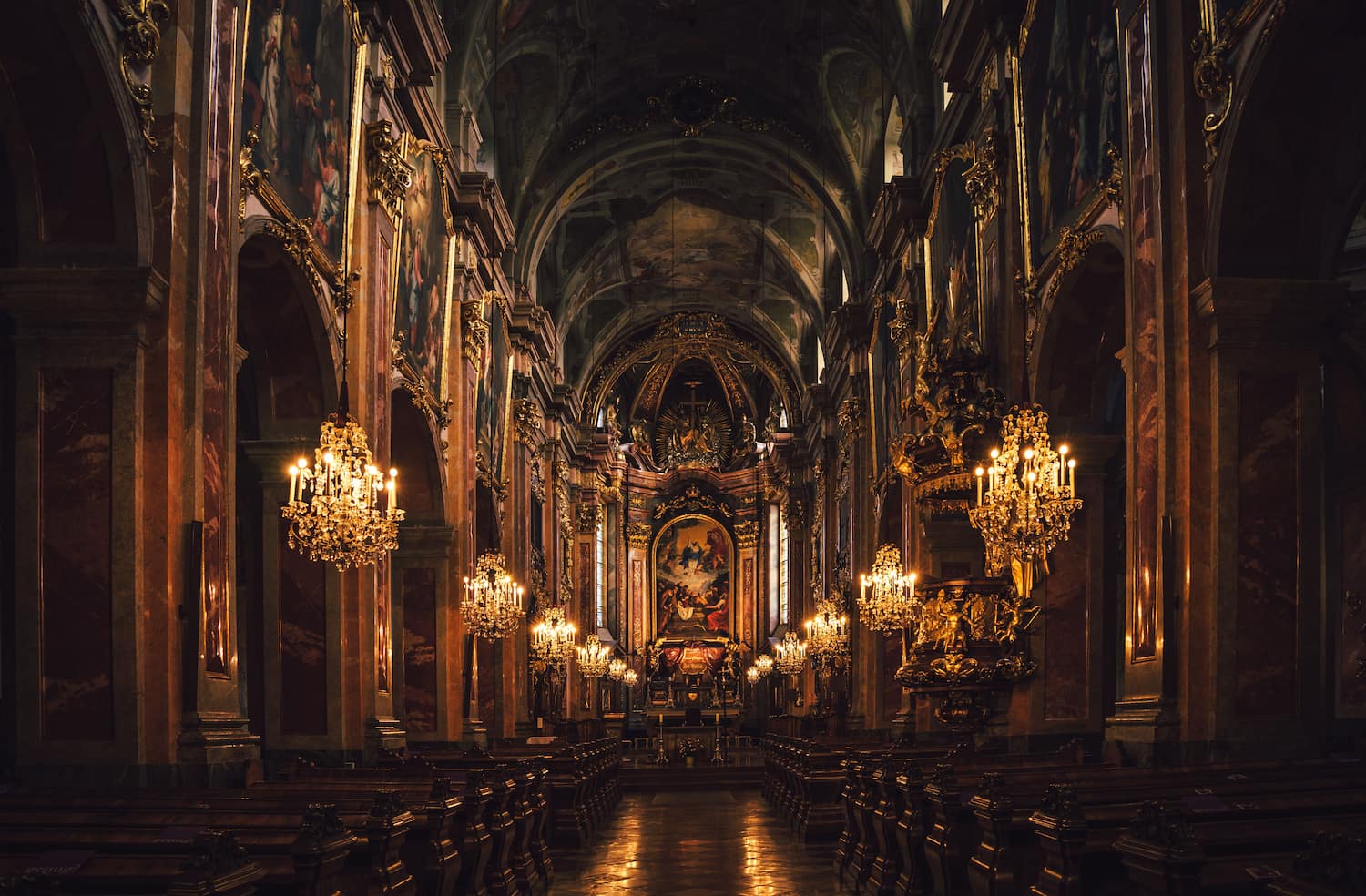
What sort of God do we represent to the world when we have no place for beauty or when we pit it against truth and goodness in our reductionism? What do we say about the One we worship when our buildings, music, liturgies, clothes and homes are ugly, when our public engagement is tainted with strident moralism and condemnation? All of these are symptomatic not just of a neglect of beauty, but a concurrent reduction of truth and goodness.
I recall being at a conference held in a beautiful alpine valley. The room that was used for plenary sessions had a marvellous view across the valley to the beautiful wooded hills opposite. So, of course, the windows were blacked out so everyone could focus more efficiently on the stage show and the projected words and images. We could have been in a warehouse anywhere in the world. What did this say about the God we were worshiping? Was this a faithful presentation of him? And yet this is celebrated as the acme of worship.
The philosopher of beauty, the late Sir Roger Scruton, commented in a documentary on beauty in architecture (a long lament for the catastrophic assault on beauty in England’s towns and cities) that when we make things that are useful, but not beautiful, they become useless very quickly. In other words, beauty is not incidental to usefulness. Human beings as image bearers cannot live without beauty, no matter how useful or efficient their homes, towns, possessions, or, indeed, churches, may be.
British architects in the 1950s and 60s embraced a reductionistic and brutal utilitarianism and very quickly their 'useful' buildings became the seedbed for all sorts of dysfunction and misery. A city like Glasgow where I was an undergraduate was afflicted particularly badly. It is encouraging to see many of these anti-human monstrosities disappearing, dynamited into piles of rubble as the powers that be have slowly come to realise that their useful and efficient, but ugly buildings were an assault on humanity. Is it possible there is an analogy with evangelicalism? Like the brutalist architects, have we embraced 'what works' at the expense of what is Beautiful, True and Good, what is human and reflective of God’s character? We may have achieved short-term success by doing so, but at what cost? Is it time for a bit of dynamite?
If you have any thoughts or comments on this article, please contact us at info@between-times.co.uk or through our contact form.